What Is Internal Skin Defense? | Alchemia MD
May 22, 2026

What Is Internal Skin Defense?
Skin health is often treated like a surface problem.
Dryness? Apply a moisturizer.
Sun exposure? Apply sunscreen.
Dullness? Add a serum.
Breakouts? Change a cleanser.
Topical care matters. Sunscreen matters. A well-built skincare routine matters.
But skin is not just a surface. It is a living organ connected to the rest of the body. It responds to sunlight, nutrition, oxidative stress, inflammation, immune activity, hormones, sleep, hydration, the microbiome, and daily environmental exposure.
That is the foundation of internal skin defense.
Internal skin defense is the practice of supporting skin health from within while continuing to protect the skin externally. It does not replace sunscreen, dermatology care, or topical skincare. It completes the picture.
A complete skin health routine works from both directions:
External protection: sunscreen, protective clothing, shade, topical skincare, and smart sun habits.
Internal support: nutrition, hydration, antioxidant support, gut-skin balance, immune balance, sleep, and daily consistency.
The goal is not to create a shortcut. The goal is to build resilience.
Skin Is Not Just a Surface
Skin is the body’s largest organ. It acts as a barrier, immune interface, temperature regulator, sensory organ, and repair system.
Every day, skin is working. It sheds. It rebuilds. It responds to injury. It helps defend against environmental stress. It communicates with immune cells. It reflects changes happening inside the body.
This is why skin health cannot be reduced to what is applied on top of it.
Topical products can help protect and support the outer layers of the skin, but internal health influences how the skin functions over time. Nutrition, inflammation, oxidative stress, hydration, and gut health can all play a role in how skin looks, feels, and responds.
Internal skin defense starts with this idea:
Healthy skin is not only treated at the surface. It is supported as part of a whole-body system.
Why Sun-Exposed Skin Needs More Than Surface Care
Sun exposure is one of the most important factors in long-term skin health.
The American Academy of Dermatology recommends broad-spectrum, water-resistant sunscreen with SPF 30 or higher, along with shade and sun-protective clothing, because sunscreen alone cannot fully protect the skin.
That point matters.
Sunscreen is essential, but real life is imperfect. People miss spots. They underapply. They forget to reapply. They sweat. They swim. They spend hours on golf courses, tennis courts, boats, beaches, patios, gardens, and in cars.
For people who live active, sun-exposed lifestyles, skin support has to be more complete.
Internal skin defense is not an argument against sunscreen. It is the opposite. It assumes sunscreen is necessary, then asks:
What else can support skin health from within?
The Internal Factors That Shape Skin Health
1. Oxidative Stress
Oxidative stress happens when reactive molecules, often called free radicals or reactive oxygen species, exceed the body’s ability to neutralize them.
UV radiation is a known contributor to oxidative stress in the skin. Research has examined antioxidant strategies because UV-related oxidative stress is involved in skin injury pathways.
In practical terms, oxidative stress is one reason skin exposed to sunlight, pollution, travel, stress, and lifestyle pressure may need consistent support.
Internal skin defense focuses on supporting the body’s natural antioxidant systems through daily habits, nutrition, and targeted supplementation where appropriate.
This does not mean an oral supplement blocks UV rays. It does not. Sunscreen and sun-protective behavior remain essential.
2. Inflammation and Immune Balance
Skin is an immune-active organ.
When the skin experiences environmental stress, the immune system is part of the response. This is normal. Problems arise when the body’s inflammatory response becomes excessive, prolonged, or poorly regulated.
Internal skin defense considers skin health through the lens of balance.
The goal is not to “shut down” inflammation. Inflammation has a purpose. The goal is to support a healthier internal environment so the skin can respond and recover appropriately.
This is why products and routines focused on long-term skin health often talk about resilience, recovery, and balance rather than instant cosmetic correction.
3. The Gut-Skin Connection
The gut and skin communicate through immune, metabolic, hormonal, and microbiome-related pathways. This relationship is often called the gut-skin axis. Reviews describe the gut-skin axis as bidirectional communication between the gastrointestinal tract and the skin, involving microbiota and immune signaling.
This does not mean every skin issue starts in the gut. It also does not mean a probiotic is a cure for skin conditions.
It means internal balance can influence skin health.
For a skin health routine, the gut-skin connection matters because digestion, microbiome balance, immune signaling, and nutrient absorption are all part of the larger system that supports skin from within.
4. Nutrient Status
Skin requires nutrients to function.
A healthy skin barrier, normal repair processes, collagen production, antioxidant defense, and immune balance all depend on adequate nutritional support.
A poor diet, low protein intake, low intake of colorful plant foods, dehydration, alcohol overuse, sleep disruption, and chronic stress can all show up in the skin over time.
Internal skin defense does not begin with a supplement.
It begins with the basics:
- Protein
- Hydration
- Colorful plants
- Healthy fats
- Micronutrients
- Sleep
- Movement
- Consistency
Supplements may help fill targeted gaps or simplify a routine, but they should not be positioned as a replacement for foundational health habits.
Internal Skin Defense vs. Sunscreen
This distinction must be clear.
Sunscreen protects externally.
It helps reduce UV exposure at the surface of the skin.
Internal skin defense supports internally.
It supports the body’s daily systems connected to resilience, balance, and recovery.
One does not replace the other.
A proper sun-care routine should include:
- Broad-spectrum sunscreen
- Reapplication
- Protective clothing
- Hats and sunglasses
- Shade
- Avoiding peak sun when possible
- Internal support through nutrition, hydration, and daily wellness
For dietary supplements, disease-treatment or disease-prevention claims are regulated. The FDA’s required supplement disclaimer states that products are not intended to diagnose, treat, cure, or prevent disease.
That is why internal skin defense should be described accurately: support, not replacement; resilience, not cure; daily routine, not medical treatment.
What a Complete Internal Skin Defense Routine Looks Like
Step 1: Protect Externally
This is non-negotiable.
Use sunscreen correctly. Choose broad-spectrum SPF 30 or higher. Reapply. Wear protective clothing. Use sunglasses. Seek shade.
For sun-exposed lifestyles, this matters even more:
- Golf
- Tennis
- Boating
- Beach days
- Outdoor dining
- Running
- Cycling
- Gardening
- Travel
- Skiing
- Daily driving
Reflection from water, sand, and other bright surfaces can increase exposure. Long outdoor sessions also increase the likelihood that sunscreen will wear off, sweat off, or be underapplied.
Internal skin defense starts by respecting external protection.
Step 2: Support Antioxidant Defense
Sunlight and environmental stress contribute to oxidative stress.
A skin-supportive diet should include antioxidant-rich foods such as:
- Dark leafy greens
- Berries
- Citrus
- Tomatoes
- Green tea
- Herbs and spices
- Colorful vegetables
- Nuts and seeds
Antioxidants are not a substitute for sunscreen. They are part of an internal support strategy.
A dermatologist-formulated supplement may be useful when the goal is to create a consistent, targeted routine instead of taking disconnected single-ingredient products.
Step 3: Support the Gut-Skin Axis
The gut-skin connection is not a trend. It is an active area of dermatology and microbiome research.
Daily gut-skin support may include:
- Fiber-rich foods
- Fermented foods if tolerated
- Hydration
- Reduced ultra-processed food intake
- Consistent meal timing
- Probiotic or microbiome support when appropriate
For some people, gut support is not about quick visible results. It is about building a more balanced internal environment over time.
Step 4: Support Calm, Balanced Skin
Skin is constantly responding to stress.
Internal support should consider:
- Sleep quality
- Stress regulation
- Immune balance
- Recovery after travel or high exposure
- Hydration
- Regular movement
- Consistent nutrition
This is where the language of “restore” becomes important.
Restoration does not mean reversing time. It means supporting the skin’s natural ability to maintain balance, recover from daily stress, and function well.
Step 5: Stay Consistent
Skin changes slowly.
A strong internal skin defense routine should be built for daily use, not occasional rescue.
The most effective routine is usually the one a person can follow consistently.
That means:
- Simple steps
- Clear purpose
- Minimal guesswork
- Products that fit into an existing routine
- No excessive supplement stacking
This is one of the main reasons system-based supplementation can make sense. Instead of asking customers to manage multiple individual bottles with unclear roles, a system can clarify what each product is meant to support.
The Protect / Balance / Restore Framework
A simple way to understand internal skin defense is through three roles:
Protect
Support skin exposed to UV and environmental stress.
This does not mean replacing sunscreen. It means supporting the internal systems involved in resilience and antioxidant defense.
Balance
Support the gut-skin connection and internal wellness.
This includes digestion, microbiome support, and the internal environment that may influence how skin looks and feels.
Restore
Support calm, balanced skin and long-term resilience.
This focuses on recovery, immune balance, and daily skin wellness.
Together, these roles form a more complete approach:
Protect externally. Support internally. Stay consistent.
Who Internal Skin Defense Is For
Internal skin defense is especially relevant for people who spend significant time outdoors or care about long-term skin health.
That includes:
- Golfers
- Tennis players
- Boaters
- Beachgoers
- Runners
- Cyclists
- Gardeners
- Outdoor professionals
- Travelers
- People with daily sun exposure
- People already investing in skincare
- People looking to simplify supplement routines
It is also relevant for people who understand that skin health is not just cosmetic.
The goal is not only better-looking skin. The goal is healthier-functioning skin over time.
What Internal Skin Defense Is Not
Internal skin defense is not sunscreen.
It is not a treatment for sunburn.
It is not a cure for acne, eczema, psoriasis, rosacea, melasma, skin cancer, or any medical condition.
It is not permission to spend unlimited time in the sun.
It is not a replacement for a dermatologist.
It is not a shortcut around smart sun habits.
Internal skin defense is a support strategy. It belongs inside a larger skin health routine.
How Alchemia MD Fits Into Internal Skin Defense
Alchemia MD was built around a simple clinical observation: many people want to support their skin from within, but the supplement category is confusing.
Customers are often left with:
- Single-ingredient bottles
- Unclear combinations
- Overlapping formulas
- Generic beauty claims
- Little dermatology-specific guidance
Alchemia MD organizes internal skin support into a clearer system:
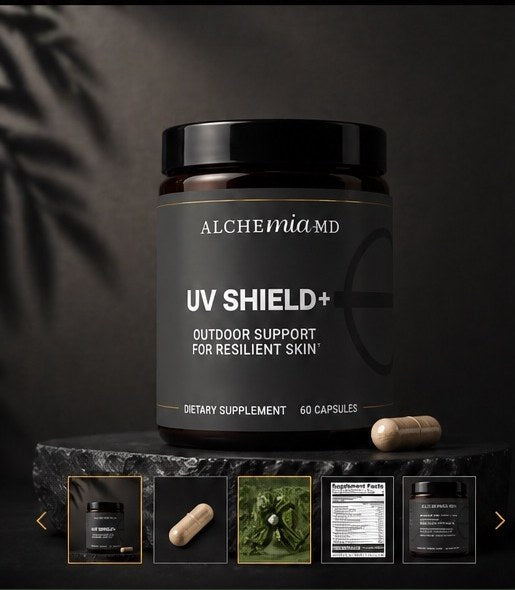
UV Shield+
Protect
Daily internal support for skin exposed to UV stress and active outdoor lifestyles.
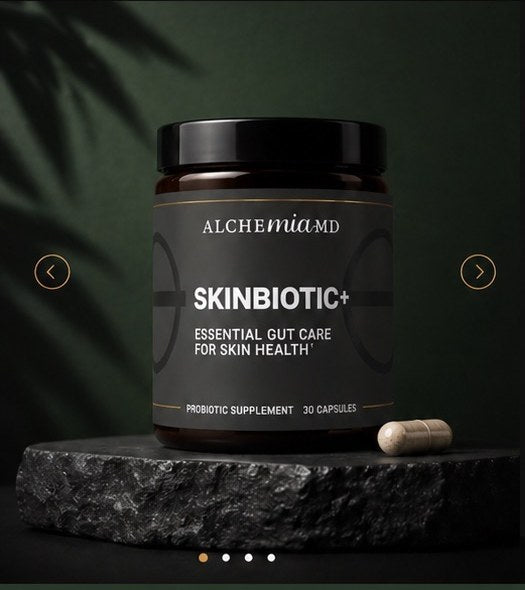
Skinbiotic+
Balance
Gut-skin support designed to help maintain internal balance and healthier-looking skin.
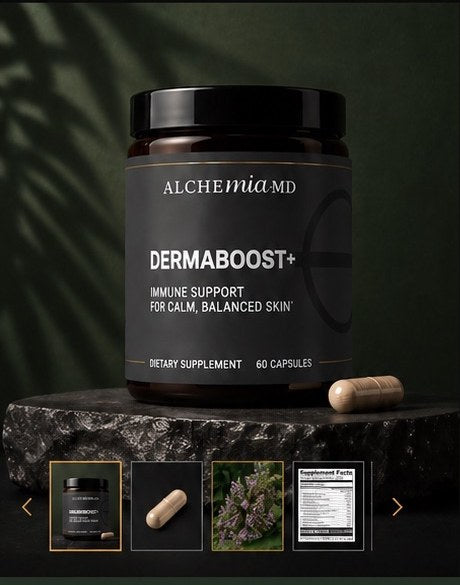
Dermaboost+
Restore
Support for calm, balanced skin and daily resilience.
Sun Safe System
The complete 3-step routine: protect, balance, restore.
The system is designed for people who live, work, travel, and play in the sun and want a more complete approach to daily skin health.
The Bottom Line
Internal skin defense is the next layer of a complete skin health routine.
It does not replace sunscreen. It does not replace dermatology care. It does not make medical claims.
It recognizes that skin is connected to the rest of the body.
A strong routine should include:
- Smart sun habits
- Topical protection
- Daily nutrition
- Hydration
- Gut-skin support
- Antioxidant support
- Sleep and recovery
- Consistent supplementation when appropriate
Skin health is not only what happens on the surface.
It is built daily, from the outside and the inside.
FAQ
Is internal skin defense the same as sunscreen?
No. Sunscreen helps protect the skin externally from UV exposure. Internal skin defense supports the body’s internal systems connected to skin resilience, balance, and recovery. The two should be used together.
Can supplements replace sunscreen?
No. Supplements do not replace sunscreen, protective clothing, shade, or smart sun habits.
Who should consider internal skin defense?
People with active, sun-exposed lifestyles, frequent outdoor routines, or an interest in long-term skin health may benefit from a more complete internal and external skin support routine.
How long does internal skin support take?
Skin support works best with consistency. Results and visible changes vary by person, routine, lifestyle, diet, and baseline health.
Does internal skin defense treat skin conditions?
No. Internal skin defense is a wellness support approach. It is not intended to diagnose, treat, cure, or prevent any disease or medical skin condition.
FDA / Supplement Disclaimer
These statements have not been evaluated by the Food and Drug Administration. Alchemia MD products are not intended to diagnose, treat, cure, or prevent any disease. Alchemia MD supplements are not a replacement for sunscreen. Use with topical sunscreen, protective clothing, shade, and smart sun habits.